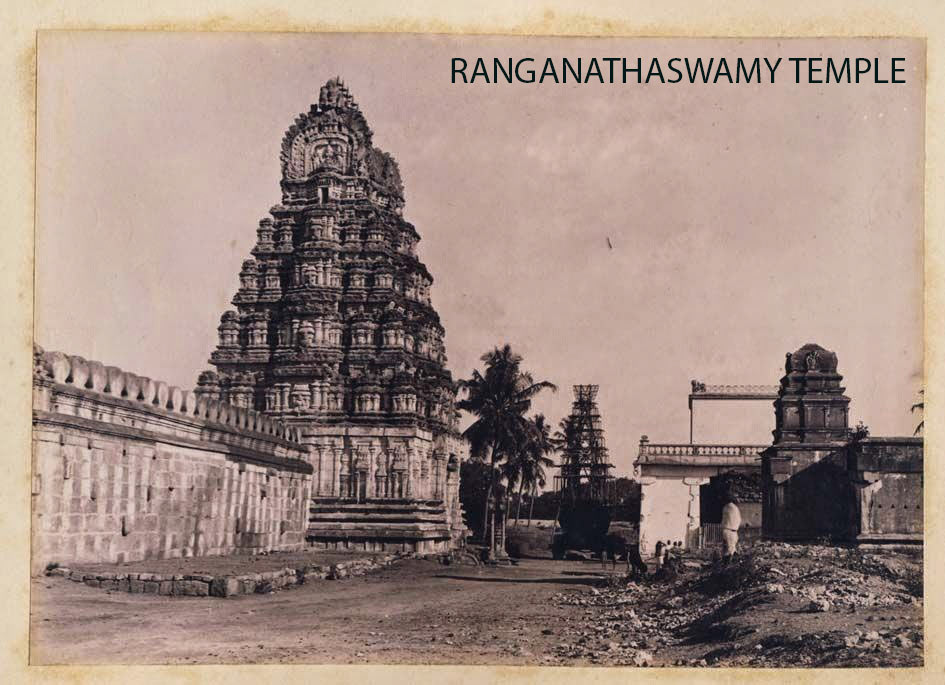
Srirangapatna is a historic river island town in Karnataka’s Mandya district, located near Mysore and enclosed entirely by the sacred River Kaveri. The island stretches about three and a half miles in length and one and a half miles across its widest center. The town is named after the Ranganathaswamy Temple, a 9th-century shrine built by the Ganga dynasty. Over the centuries, Hoysala and Vijayanagara rulers expanded and strengthened the temple, creating a rare blend of architectural styles that reflect the evolution of South Indian temple design.
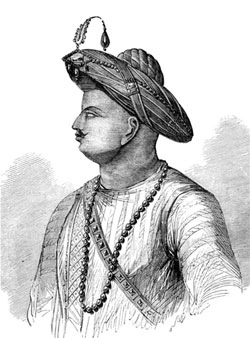
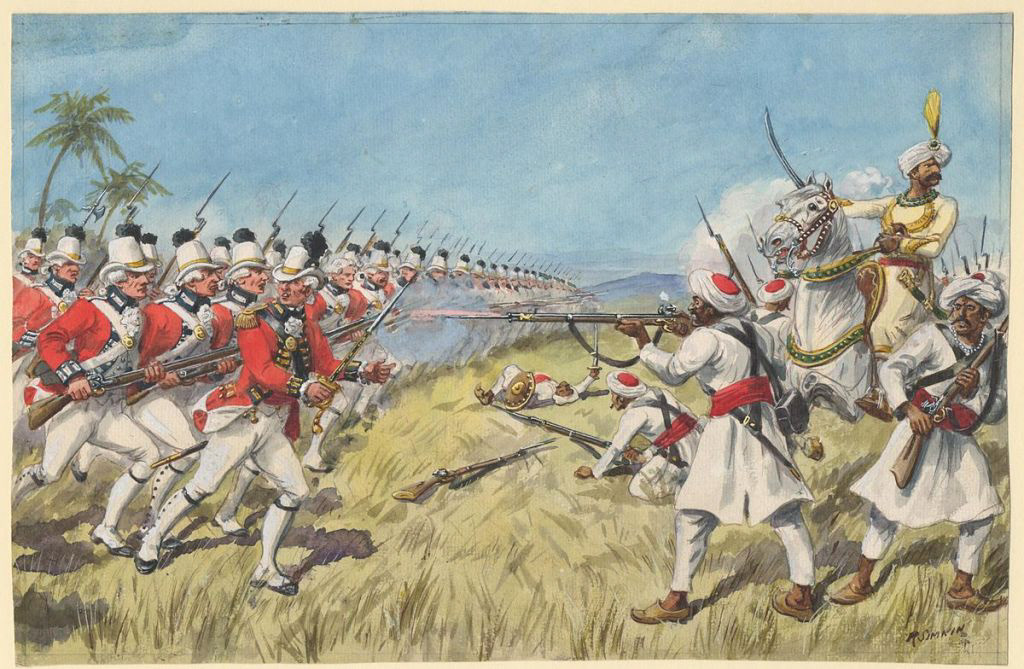
Tipu Sultan, formally known as Sultan Fateh Ali Sahab Tipu, is inseparable from the identity of Srirangapatna. As the eldest son of Hyder Ali, he introduced a number of administrative innovations that included a new Mauludi lunisolar calendar and a distinctive coinage system. Tipu is also considered a pioneer in the use of rocket artillery in India. Hyder Ali captured Mysore in the mid eighteenth century, and after his death in 1782, Tipu succeeded him. He won major victories against the British during the Second Anglo Mysore War and became one of the most significant military leaders of his time.
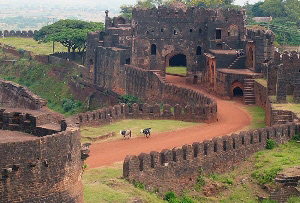
The Srirangapatna Fort became a major center of power during Tipu Sultan’s rule. He renovated the fort and constructed gateways with the assistance of French engineers. The fort was regarded as one of the strongest in India, due mainly to its strategic location. The northern and western sides were naturally protected by the River Kaveri, which became impossible to cross during the monsoon season without a bridge. The ample availability of granite in the region helped in constructing strong revetments, bastions, gateways, and thick fort walls. Natural granite was also used for the moats, and on the northern and western fronts, the river itself served as the outermost moat.
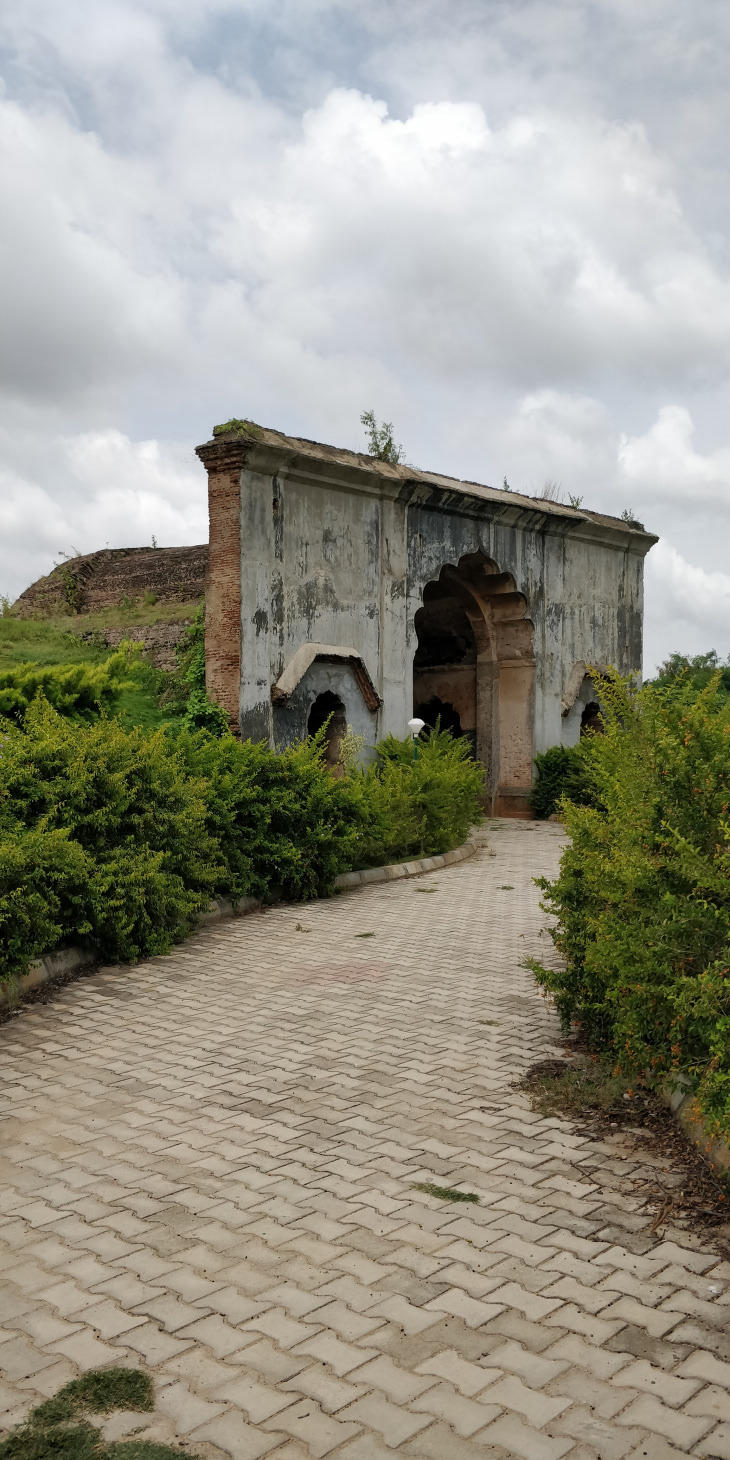
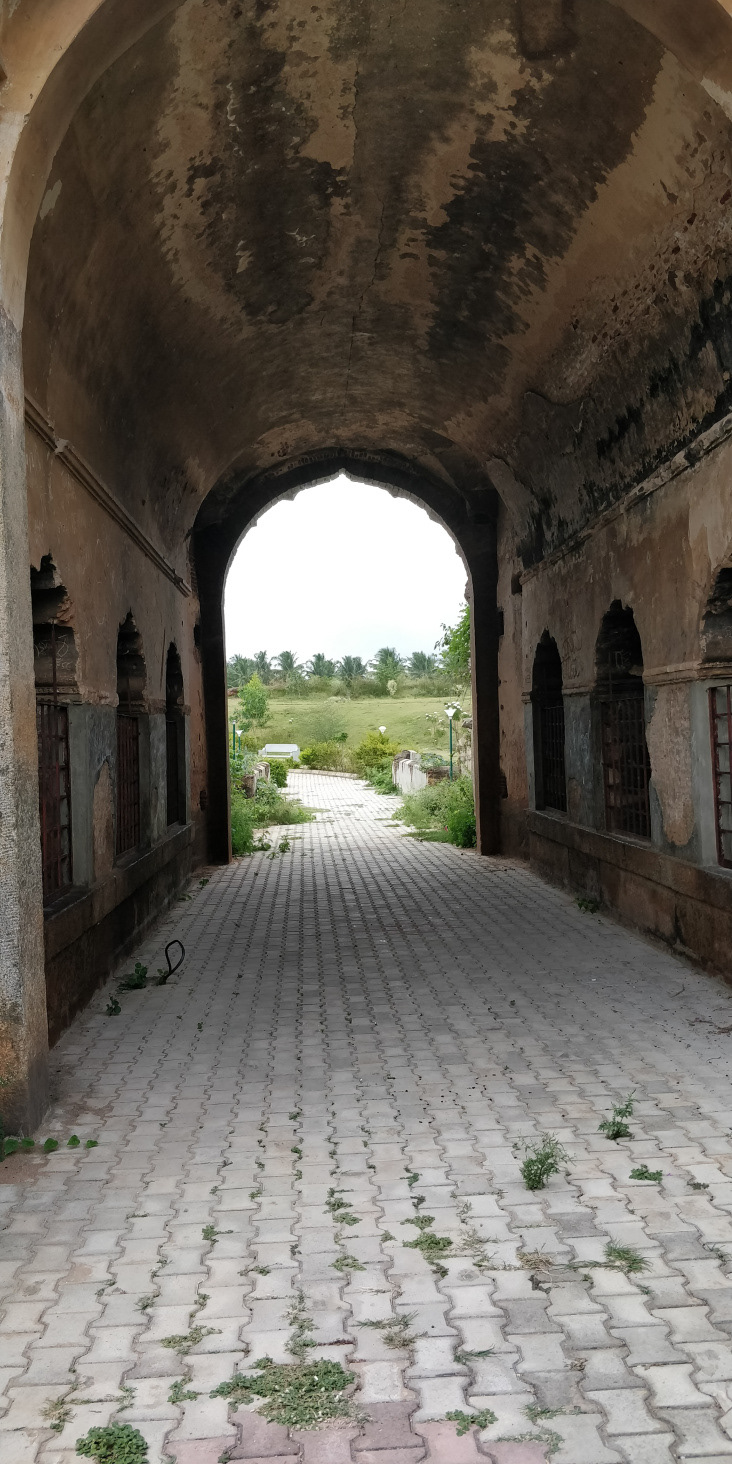
The fort contained six major gateways: Bangalore or Ganjam Gate, Mysore Gate, Water Gate, Delhi Gate, Elephant Gate, and Jibi Gate. The Elephant Gate, also called Anekote Bagilu, was built in 1791 specifically to allow an elephant carrying a royal howdah to enter the city. This monumental entrance originally consisted of three gates aligned within three fortified enclosure walls. Each gate was constructed with stone, brick, and lime mortar, and measured approximately 5.5 meters in height, 3.75 meters in width, and 14.75 meters in length. Though heavily damaged in later years, portions of the central entrance have been repaired with modern key stone arches.
The fort walls once held dungeons for prisoners of war. Between 1761 and 1799, Hyder Ali and Tipu Sultan fought the British in four major Anglo Mysore battles and captured many British officers. These prisoners were kept inside the fort at Srirangapatna. On the northern side of the fort stands Sultan Battery, an oblong bastion that holds a heavy cannon battery. Beneath it is Colonel Bailey’s Dungeon, a concealed chamber measuring 30.5 meters in length and 12.2 meters in width. Its low vaulted roof, brick and lime mortar construction, and series of arches supported by large pillars give it a unique character. Stone slabs with holes line the walls, believed to have been used to fasten prisoners with chains. During the siege of Srirangapatna, a cannon rolled back, broke through the ceiling, and fell into the dungeon where it still rests. Colonel Bailey died here on 13 November 1782 after a prolonged illness, and the site carries his name.
Tipu Sultan’s palace once stood about 150 meters northeast of the Ranganathaswamy Temple. This lime plastered brick structure once consisted of large halls, apartments, and decorative gardens. Buchanan, who visited in 1800, described it as an elegant palace with ponds, evergreen trees, and finely proportioned rooms. After the British captured Srirangapatna in 1799, much of the palace was demolished and used temporarily as a military post. Recent excavations have revealed a pillared hall, a portion of a staircase, and traces of the original plinth.
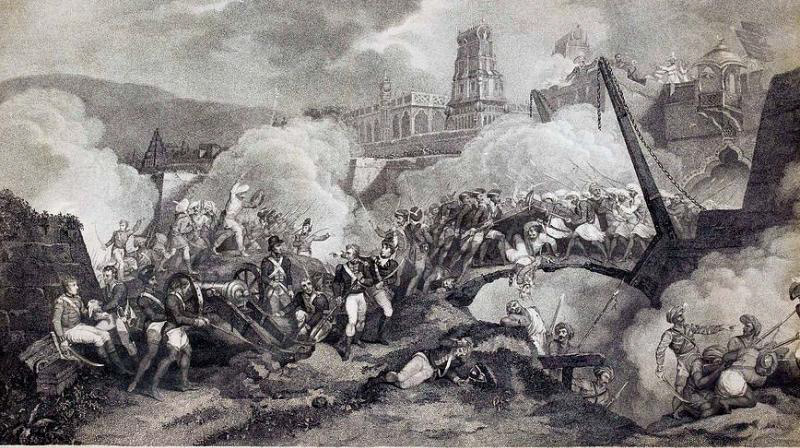
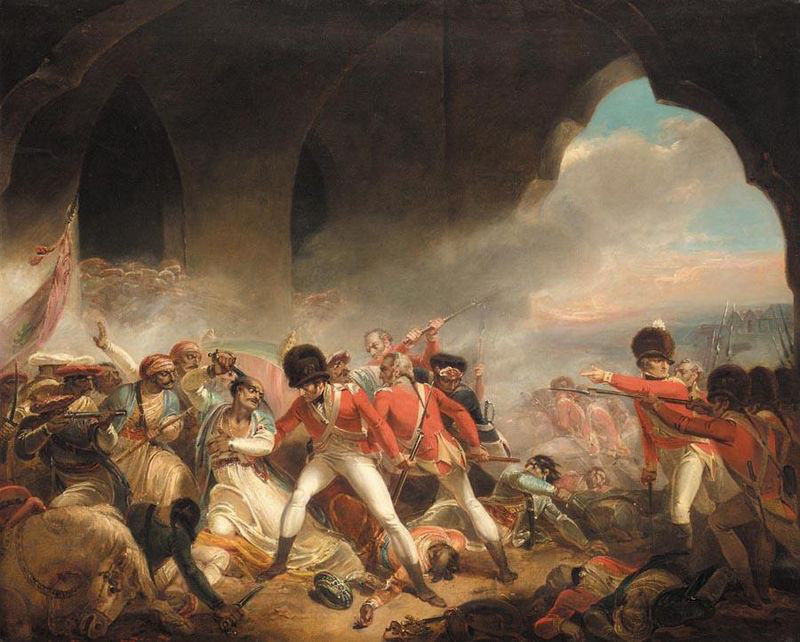
The fall of Srirangapatna during the Fourth Anglo Mysore War was a defining moment in history. In 1799, British forces breached the fort wall near the Water Gate. During the intense battle, Tipu Sultan was confronted by British soldiers. One of them attempted to seize his golden belt. Tipu resisted, striking with his sword, and in the struggle, another soldier fired at him, hitting him in the temple. His body was discovered later that evening beneath a pile of fallen soldiers. A memorial stone now marks the exact place where he was killed.
Within the town stands the Jama Masjid, a grand mosque constructed by Tipu Sultan. It features two tall minarets, a prayer hall filled with trefoil arches, and a mihrab set into the western wall. Stone inscriptions quoting verses from the Quran decorate the interior. Visitors can climb more than two hundred steps inside the minarets to enjoy a panoramic view of Srirangapatna. The exterior is characterized by an octagonal design, pigeon hole motifs, decorative domes, finials, and large masonry kalashas that add elegance and height to the structure.
At the eastern edge of Srirangapatna lies the Gumbaz, the mausoleum built by Tipu Sultan to honor his father, Hyder Ali. His mother Fakr Un Nisa was also buried here. Although the structure was not originally intended as Tipu Sultan’s resting place, he was interred here after his death in 1799. The monument sits at the center of a beautiful garden filled with flowering and fruit bearing trees. It features a square chamber surrounded by a corridor of polished black stone pillars, intricately carved granite jalis that filter natural light, and teakwood doors inlaid with ivory. The large dome above the structure rises from a circular base and is surrounded by decorative parapets and guldastas. The interior walls are adorned with paintings that include tiger stripe motifs, a symbol strongly associated with Tipu Sultan.
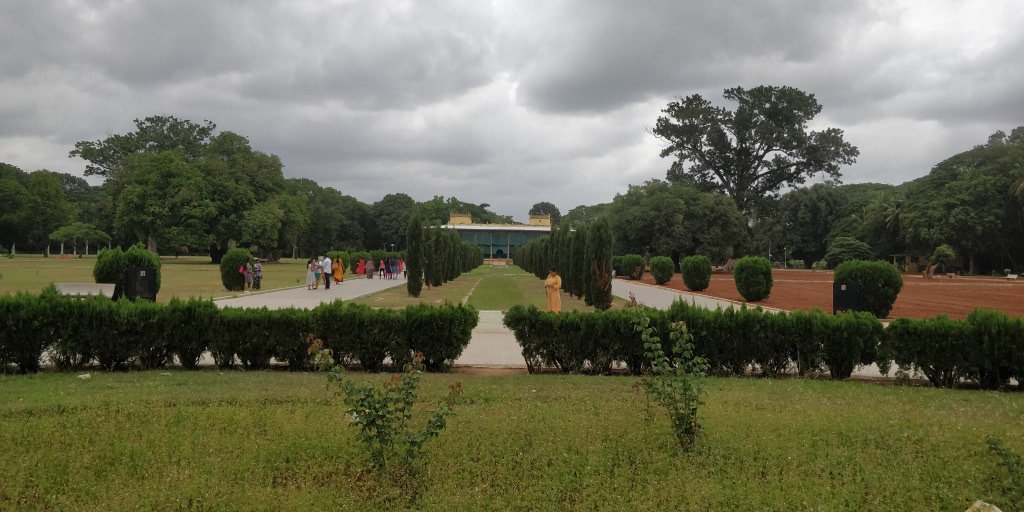
Another significant site on the island is Daria Daulat Bagh, the summer palace of Tipu Sultan completed in 1784. The palace stands on a raised platform and is surrounded by lush gardens. Built in the Indo Saracenic style, this structure houses the Tipu Sultan Museum, which displays oil paintings, murals, pencil sketches, and objects related to Tipu’s life and the Mysore wars. The palace interiors are rich with mural paintings depicting war scenes, colonial officers, kings, and stories from Tipu’s era. Many of these paintings were created by soldiers of the East India Company who sketched the landscapes and buildings around them.
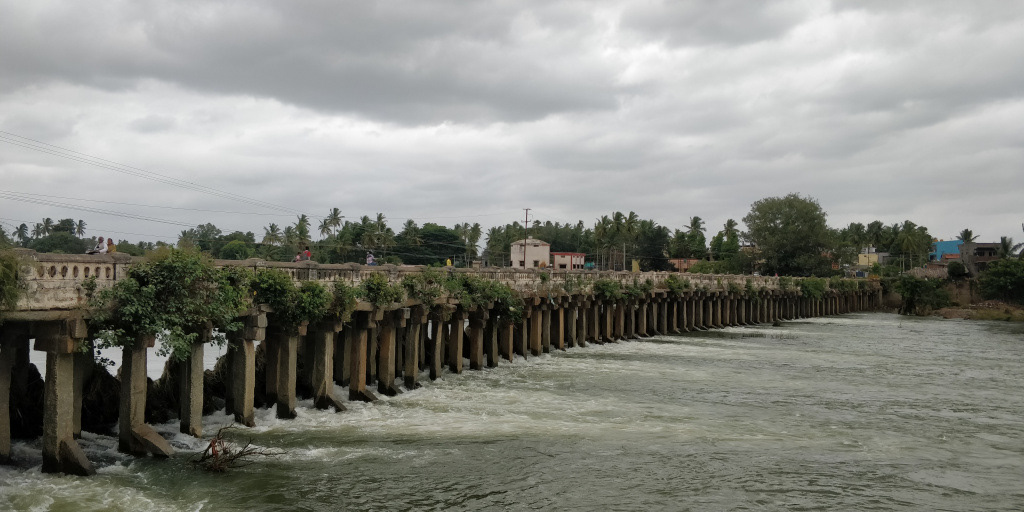
Wellesley Bridge, built in 1804 under Dewan Purnaiah, stands over the River Kaveri and remains an important example of traditional engineering. The bridge contains sixty four spans of stone pillars topped with stone corbels and stone girders that support the roadway. Despite the rough construction methods of the time, it has survived more than a century of heavy floods without significant damage.
Srirangapatna continues to be one of the most important centers of pilgrimage and heritage in South India. Its temples, palaces, dungeons, gateways, forts, gardens, and monuments tell a layered story that blends spirituality, architecture, warfare, and resilience. Protected today by the Archaeological Survey of India, the town feels like a living museum, where each structure carries its own memory and meaning.